and I just saw a phone video in which a Beirut apartment building collapses like a domino house. I don’t know the apartment building but the area looks familiar, and the speed with which the barely visible rocket brings the whole thing down makes it seem like an action flick or a video game. Unreal. I am scared for the friend who sent me the video, I am incredulous and distressed, but there is nothing either of us can do to stop the region-wide murder rampage and there is no point saying, again, that it shouldn’t be allowed to happen. It’s happening.
At some point since I last wrote, a kind of spoke was thrust in the cosmic wheel of my affairs, I feel: wherever I turn in my life something is delayed or stalling or falling through. It feels connected with the apocalyptic insanity going down all around us though I couldn’t quite tell you how, and the maddening slowness, besides, has opened contemplative doors.*
Also, it’s not entirely true. In January I got an unusually substantial royalty payment for the original version of The Crocodiles, two invaluable long-distance collaborations are now happily underway, and two new reviews of The Dissenters are out: one (alongside Deena ElGenaidi’s Dust Settles North) in the 125th Wasafiri, and the other (by my amazing colleague Dina Ezzat) in Al Ahram itself!
Still, in an attempt to de-jinx the moment, I am rushing to share this essay in the new issue of Guernica, “Ring,” graciously published by the inimitable Raaza Jamshed. It is a meditation on boxing, poetry, Gaza, and the death of my dear friend, the truly great poet Mohab Nasr. And it’s the first true excerpt from Postmuslim: A Testimony, which makes this a good time to share the cover (in case you haven’t seen it on my Instagram):
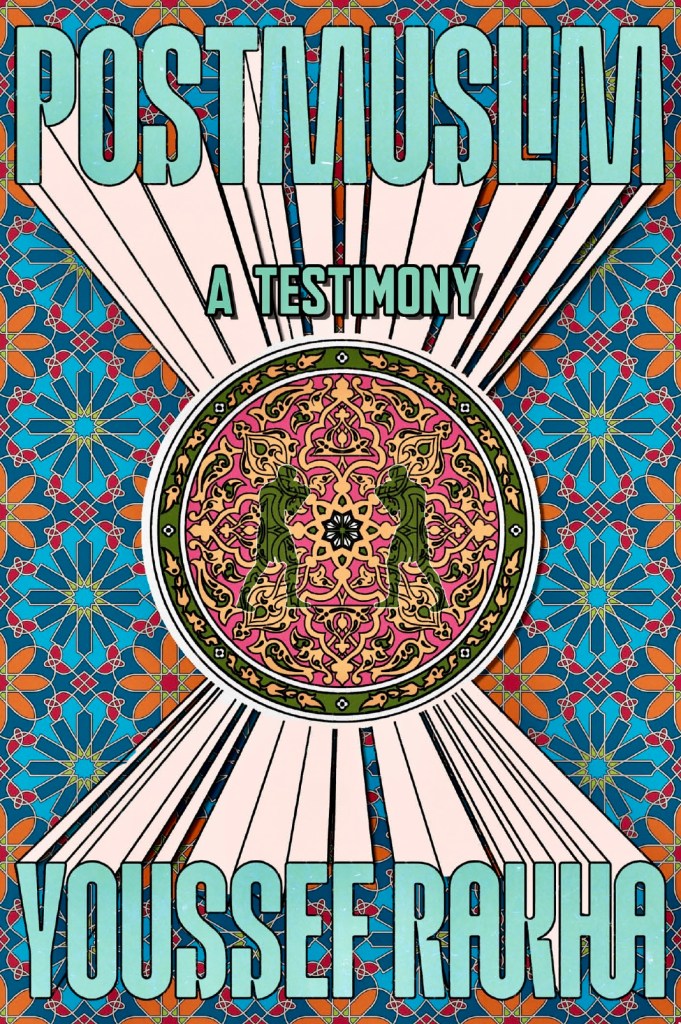
It’s designed by Michael Salu (Vestibule), and it captures the spirit of the work beautifully: heritage celebrated in a contemporary, even superhero idiom, and boxing seamlessly integrated into the arabesques of a fraught identity. Postmuslim is already available for preorder here or (if you must) here. For those who might like to preview or talk to me about it, a digital ARC is available too; and, if you’re in the US, I can arrange for something physical to be mailed to your address eventually.
I want you to know the core ideas behind this book have been with me since at least 2010, when I wrote The Book of the Sultan’s Seal. The term itself started besieging me in 2012. I think, in some sense, this question of why it might be difficult or contradictory to be a Muslim in the modern world informs everything I’ve written. The new essays are at the intersection not just of autobiography and theory but also of identity and discourse. It is both personal and painful, all of it, but I’m happy to discuss it—or comment on it in writing—at least till September 15, when the book comes out.
I also want you to know that I’ve been thinking not just of Mohab but of Roberto Bolaño, who died a little over two months after he turned fifty, and whose writing has consistently restored my faith in what I do. I’ve been rereading his short stories to mark my own entry into that stage of life (I turn fifty in June), and they have lifted me out of a creative slump and propelled me in rewarding directions.
My best and warmest,
Y
* One example of a contemplative door: this quote from a work in progress, a companion piece to Postmuslim written in the form of a remonstrance addressed to khawagas, the (white) Westerners who feature so prominently all through the book:
In Good Girl, Aria Aber refers to her Muslim heritage as a rotten apple the immigrant father plants in his Berliner daughter’s breast… But in my world, which I write to make you aware of, I’ve come to see that rotten apple as a magic gemstone. A portal not just into glorious legacies but also into the vicissitudes of history, and a heart with which I get to love you without having to hate myself. Even as I see you mass murdering babies because they happen to be born into it, my identity is a gift and a fuel; a superpower.
 The Rakha
Leave a comment